
The Art of Mindful Eating: A Transformative Exercise to Reconnect with Your Food


In today’s hustle and bustle, it’s easy to forget the essence of eating – nourishment, pleasure, and gratitude. Mindful eating offers a sanctuary to reconnect with these principles, transforming each meal into a moment of reflection and presence. Join me in this transformative exercise and embark on a journey to rediscover the joy of eating mindfully.


What is Mindful Eating?

Mindful eating is a practice that encourages being present during meals. It’s about savoring each bite, acknowledging the flavors, textures, and sensations, and truly appreciating the journey of food from the farm to your fork.


Why Practice Mindful Eating?

  1. Improves Digestion: Paying attention to what you eat can enhance digestion, as the body prepares itself for food when we focus on it.
  2. Promotes Healthy Eating: By listening to your body’s hunger and fullness cues, you’re less likely to overeat and stop eating when you feel just right or adequately full.
  3. Enhances Enjoyment: Taking the time to savor food increases pleasure and satisfaction from each meal.
  4. Reduces Stress: Being present during meals can act as a form of meditation, reducing anxiety and stress.

Mindful Eating Exercise:

Before beginning, choose a small piece of food – a fruit, a nut, or even a piece of chocolate.

  1. Visual Appreciation: Look at your chosen food item. Notice its shape, color, and texture. Appreciate its beauty and think about its journey to reach you.
  2. Sensory Engagement: Close your eyes and smell the food. What memories or emotions does the scent evoke?
  3. Tactile Exploration: Feel the food with your fingers. Is it smooth, rough, soft, or hard?
  4. Taste: Take a bite but don’t swallow immediately. Let it rest in your mouth. Explore its taste – is it sweet, salty, sour, or bitter? Notice the textures as you chew.
  5. Swallowing: Focus on the act of swallowing. Feel the food traveling down, nourishing your body.
  6. Reflection: Take a moment to express gratitude. For the farmers who grew it, the hands that prepared it, and the earth that produced it.

Mindful Eating Tips:

  • Start Small: Begin with one meal or snack a day and gradually incorporate it into other meals.
  • Disconnect to Connect: Keep away from distractions like TV, smartphones, or reading during meals.
  • Practice Gratitude: Before eating, take a moment to express gratitude for your meal.

Wrapping Up

Mindful eating is a journey, not a destination. It’s about embracing the present moment, reconnecting with your food, and celebrating the simple joys of eating. Ready to embark on this transformative experience? Start today and pave the way for a healthier, more gratifying relationship with your meals.

For more tips and exercises on wellness and mindfulness, explore our blog and subscribe to our newsletter!

Looking for the perfect dish to practice this exercise with? Dive into our curated recipes here!

Cover image by Kamila Bairam

Bountiful Harvest Lentil and Zucchini Stew: A Fresh Summer Recipe


As the summer sun blesses our gardens, we find ourselves overwhelmed and filled with gratitude for the bounty that comes our way. Especially zucchinis! They seem to grow overnight, and what better way to celebrate this generous veggie than in a hearty stew? This Lentil and Zucchini Stew encapsulates the spirit of the season and is the perfect way to savor our summer harvest.

Looking for more stew dishes?
Versatile Lentil & Zucchini StewAdapted from the pantry, inspired by life’s surprises
Red Lentil Stew with a Citrus Twist (Vegan)


Ingredients for Lentil and Zucchini Stew:

  • 1 yellow onion, finely chopped
  • 1-2 garlic cloves, minced
  • 1/2 cup (1 dl) lentils, washed and drained
  • 1 medium zucchini, diced
  • 2 ripe tomatoes, chopped
  • Salt, to taste
  • Pepper, to taste
  • A pinch of turmeric (gurkmeja)
  • A sprinkle of chiliflakes, adjust to your heat preference
  • Butter or olive oil, for sautéing

Cooking Instructions:

  1. In a pot, melt the butter or heat the olive oil over medium heat.
  2. Add the chopped onion and minced garlic. Sauté until translucent.
  3. Incorporate the lentils, stirring occasionally for about 2 minutes.
  4. Add the diced zucchini and chopped tomatoes to the pot.
  5. Season with salt, pepper, turmeric, and chiliflakes.
  6. Let it simmer on low-medium heat until the lentils are cooked through and the zucchini is tender.
  7. Adjust seasoning if necessary.
  8. Serve hot and enjoy the tastes of your bountiful summer harvest!

Tips to Make the Perfect Lentil and Zucchini Stew:

  • Freshly harvested ingredients always make dishes more flavorful. If you have a garden, use your freshly picked zucchinis and tomatoes for this recipe.
  • If you prefer a more liquid consistency, you can add vegetable broth.
  • Garnish with fresh herbs like parsley or basil for an extra kick of freshness.

Enjoyed this recipe? Leave a comment below sharing your experience! And if you’ve made tweaks to make it even better, we’d love to hear them. Don’t forget to share this recipe with your friends and family so they can also savor the flavors of the season!

Fortune in Farming: The Unexpected Harvest 

Sometimes, it’s all about luck and gratitude in the garden.

This year, our commitment to our crops took a back seat. We spent a considerable amount of time in Austria and even rented out our house. We genuinely relied on pure luck, fully prepared for things to perhaps not pan out as planned. But oh, how fortunate we’ve been!

I had planted a substantial amount of potatoes, and they’ve thrived more than I could have hoped for. A little test dig confirmed a rewarding yield. I’d always hoped the potatoes would at least show some progress. But the real astonishment? The zucchini!

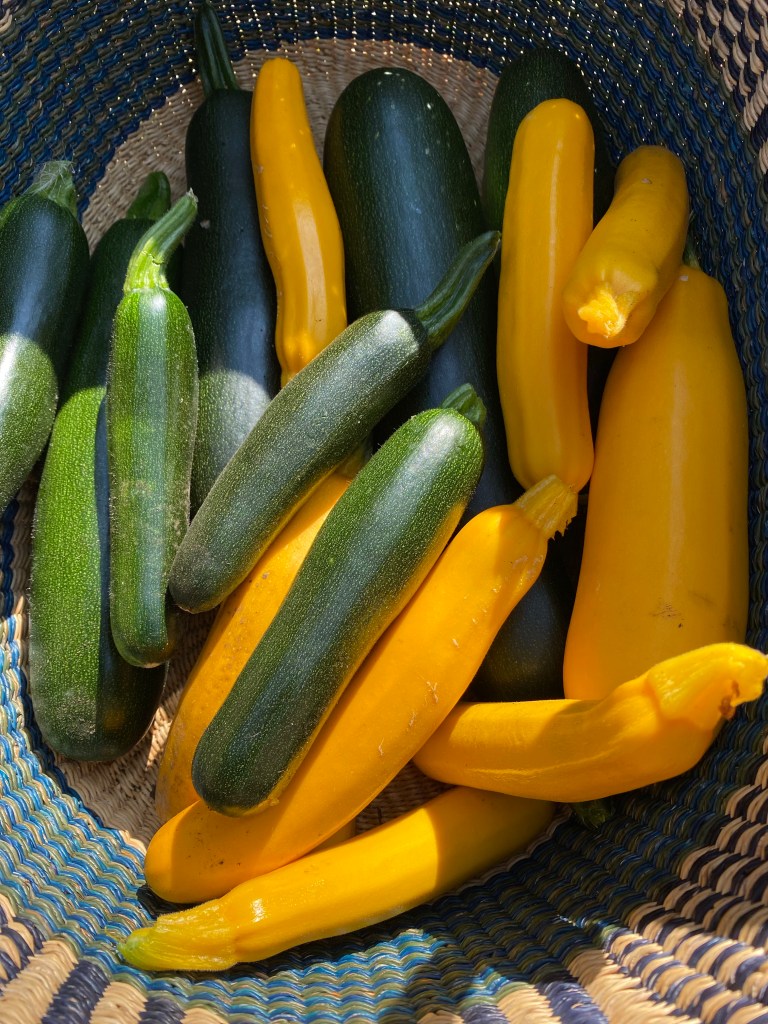
In a bid to have something robust enough to compete with the weeds, I decided on zucchini plants. I sowed a bunch of seeds in small pots and almost all of them sprouted within days. Once they reached a height of 5-10 cm, I transplanted them to the garden bed, gave them a good watering, and headed off to Austria. Since then, I hadn’t touched them. No watering, no weeding – nothing. And now, I’ve reaped the first harvest: a whopping 3 kg! Absolutely mind-blowing!

It’s nothing short of miraculous that the plants neither withered from drought, got devoured by slugs, nor rotted away. It was a gamble that could’ve gone either way. Relying on such a carefree approach isn’t typically recommended. But I’m delighted I took a chance. This experience has instilled a newfound peace in me. It’s a reminder that not everything in the garden needs meticulous attention or perfectly timed sowing. Sometimes, things just work out – with a sprinkle of luck, of course!

A Heartfelt Note of Gratitude

In reflection, this unexpected bounty from the garden has served as a beautiful reminder of life’s unexpected gifts. It’s easy to become entwined in our meticulous plans and efforts, often forgetting that nature, with its rhythm and wisdom, often has its own designs. This year, as I look at the flourishing zucchini and the thriving potatoes, I’m overwhelmed with gratitude. Not just for the produce, but for the humbling lessons and the joy of witnessing the garden’s resilient spirit. It teaches us to appreciate the surprises, to be thankful for the little miracles, and to always remain hopeful. Because sometimes, when left to its devices, nature unfurls in ways more wondrous than we could have ever orchestrated. So, here’s to every unplanned bounty, every stroke of luck, and every moment of pure, unanticipated joy. Thank you, Mother Nature, for the blessings in disguise.

Read about the insights and aspirations that shaped this year’s gardening plans here.

Bountiful zucchini harvest from a carefree garden

Essential Harvesting Tools Every Gardener Should Own 

This post contains affiliate links.

Harvest Apron
Though I haven’t treated myself to a harvest apron yet, I’m certain that once I do, it will quickly become indispensable. Imagine being able to gather your produce hands-free, simply collecting as you go. Pure magic! My plan is to craft one during the winter, a time when the garden requires less attention. And of course, I’ll share a step-by-step guide, perhaps even a video tutorial right here for you. But if you can’t wait or aren’t inclined to DIY, there are stunning options available for purchase. Here’s a link to one that I believe is top-notch!

Harvest apron

Pruner
The ideal tool for cutting back overgrown and withered plants. I also find it perfect for harvesting veggies with thicker stems, like zucchinis or small pumpkins. A sharp, well-maintained blade ensures clean cuts, making your job hassle-free. Check out this high-quality pruner I recommend.

Pruner

Pruning Saw
A pruning saw is particularly essential when dealing with sizable pumpkins. For a neat cut and an optimal stem length, this tool gives you perfect control. Besides its harvesting benefits, it’s also great for autumn pruning of fruit trees and robust shrubs. Fiskars is a brand I truly vouch for – its products promise quality and durability!

Pruning saw

Top-Notch Scissors
A pair of stellar scissors is a must during the harvest season! Their versatility is endless: from harvesting bunches of parsley, cilantro, and other herbs, to snipping away ties amongst tomatoes and beans, or even cutting down clusters of tomatoes and grapes. The list goes on. I never set foot in the garden without scissors in my pocket. And if ever I forget them, it’s mere minutes before I realize their necessity.

Scissors

Border Fork
Being a self-sufficient gardener means limited machinery for me. Most crops are no fuss given the manageable quantities I grow. But when it comes to potatoes – a staple in our garden – the right tool is non-negotiable. I swear by the border fork to delve beneath the plant and unearth every potato it has nurtured. Traditional large shovels make the job dauntingly heavy, while a smaller spade or bare hands may leave some potatoes unharvested. The border fork, however, aerates the soil, ensuring you retrieve each hidden gem.

Border fork

In the world of gardening, the right tools can truly elevate your experience. These are my top picks, and I’d love to hear about your essential tools in the comments below!

Cover image by Anna Tukhfatullina

Picking Blueberries with Kids: The Ultimate Practice of Patience

Before parenthood, my blueberry-picking adventures resembled a well-oiled machine. I’d zoom through the forest, swiftly and efficiently collecting buckets full of juicy blueberries to fill my freezer. However, with kids in tow, the blueberry-picking experience has transformed entirely.

First and foremost, there’s the challenge of coaxing them into the forest. On our path, every snail, intriguing stick, radiant flower, and beetle demands attention. Each one must be meticulously inspected and appreciated before we can proceed. Once we venture deeper into the woods, the adventure continues. There are branches perfect for balancing acts, and rocks just waiting to be scaled. Patience, indeed!

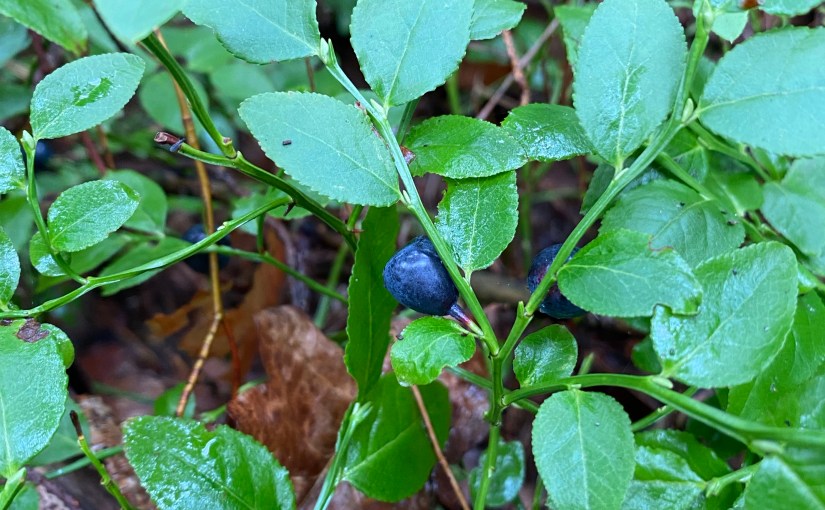
Finally, we reach our destination: the blueberry haven. As I settle down to pick, my child’s enthusiasm to join in lights up my heart. So, we pick together, engaging in heartwarming conversations amidst the blueberry bushes. This quality time amidst nature becomes more valuable than any bucket of berries.

But, as lunchtime looms, our little adventure wraps up. As I look into our container, just a handful of blueberries grace the bottom. The freezer might remain berry-less this time, but the day offers something even more precious: a perfect lesson in mindfulness, taught by the best teachers – our children!

Get a discount on vegan, organic, skin-, hair, and bodycare for the whole family!

(This post includes affiliate links as part of a promotional offer.) Follow this link to get 10% discount on Butter me up organics products! Use the code “Greenlife10“.

Discover Butter Me Up Organics! Unleash the Power of Nature on Your Skin

In a world where self-care is paramount, one company stands out as a beacon of natural goodness. Butter Me Up Organics, a name synonymous with purity, offers a transformative range of skincare, haircare, and body care essentials that cater to every member of your family.

A Philosophy Rooted in Wholesomeness

At Butter Me Up Organics, their core belief is simple yet profound: treat your skin like the precious organ it is. Their motto, “Don’t put anything on your body that you wouldn’t put in it,” speaks volumes about their commitment to quality. Imagine, all their products are completely edible, containing non-toxic premium ingredients. The concept challenges you to reconsider your current choices—are your skincare products truly aligned with your well-being?

A Sanctuary of Organic Goodness

Delve into a realm where organic goodness flourishes. The company prides itself on being completely organic, ensuring that each product nurtures without compromising nature. Cruelty-free practices underscore their commitment to ethical values, inviting you to be a part of a responsible skincare movement.

A Ritual of Purity

One of the hallmarks of Butter Me Up Organics is the absence of sulfates, phthalates, and parabens. No synthetic dyes or fragrances taint their creations. Instead, each product is an ode to all-natural ingredients, transforming your skincare routine into a ritual of purity.

Harmonizing with the Environment

Not content with merely offering exceptional products, the company goes above and beyond by championing eco-friendliness. They proudly identify as a zero-waste company, an emblem of their dedication to sustainable practices. Upcycled packaging materials add an extra layer of consciousness to every product.

An Invitation to Transcend

Butter Me Up Organics beckons you to transcend conventional skincare. Their comprehensive range caters to your family’s diverse needs, providing a holistic solution for skin, hair, and body care. Step into a world where ingredients matter, where authenticity and excellence collide.

Elevate Your Skincare Ritual

Embrace radiant wellness with products that mirror your values—products that prioritize purity, ethics, and sustainability. Take advantage of this 10% discount on your purchase using the code “Greenlife10“. Make the conscious choice, and let your skin thrive in the embrace of nature’s bounty. Your skin deserves nothing but the best.

Butter me upp organics, 10% discount when using the code Greenlife10

Gardening and Embracing the Art of Letting Go

In the gentle realm of gardening, there lies a profound lesson on one of mindfulness’s core attitudes: letting go. This blog post delves deep into how our gardens can teach us the practice of letting go and how this simple act can have profound effects in other facets of our lives. After all, embracing the present moment often means releasing the past or our preconceived notions.

Understanding the Nature of Gardens

Nature, in all its untamed beauty, refuses to be completely controlled. This is true for our gardens as well, regardless of our best efforts to shape them. While certain aspects remain within our grasp, others elude our control. The dynamics change with people, gardens, seasons, and years. And just as mindfulness isn’t about mastering something to use constantly in every life scenario, it’s about knowing when and where to apply it.

The Essence of Letting Go

Is letting go synonymous with admitting defeat? Far from it. Letting go stands in stark contrast to the act of desperately holding on. It’s a journey from confinement to liberation. Intense desires often lead us to a point where our fixation becomes suffocating. Sometimes, the tighter we grip, the more detrimental it becomes, especially if our efforts seem fruitless. The challenge then is not about how much we’ve invested but about finding the courage to release. In setting ourselves free from these chains, not only do we find peace, but often, the universe surprises us in ways we hadn’t imagined, opening doors we hadn’t noticed while we were too focused on a closed one.

Practicing Letting Go in the Garden

My garden has taught me countless lessons. Have you ever nurtured your plants to the point they withered? Or been so engrossed in one aspect that others were left neglected? Or pursued garden perfection only to be left feeling drained? The garden offers endless opportunities to practice letting go. From allowing nature to take its wild course, to moving away from perfectionism, to discarding plants that no longer serve their purpose. For instance, discarding frail tomato plants might be difficult, especially when you’ve invested so much love. Yet sometimes, holding on brings more pain than release. Whether it’s the towering weeds or the unkempt lawn, sometimes the best action is inaction. After all, a few imperfections don’t define your garden’s beauty or worth.

From the Garden to Life

Our gardens become our safe haven, free from judgment, allowing us to practice letting go. With every lesson learned among the flowers and leaves, we find the confidence to apply the same in life’s broader canvas. Letting go isn’t about giving up; it’s about making space. Just like taking a breath, releasing it, and making room for the next.

It’s time to stroll into your garden, shedding any notions of perfection or predetermined standards. Embrace it for what it is, and you’ll find yourself looking at it – and perhaps life – with rejuvenated eyes.

Post image: Ksenia Chernaya

Unveiling Acceptance: A Vital Key in the Nine Attitudes of Mindfulness

Dive into a critical component of mindfulness in this blog post: acceptance. Being one of the nine attitudes shaping our day-to-day life, acceptance guides us like a compass through a spectrum of situations, from the mundane to the monumental. While acceptance can be a challenging concept, its transformative potential is simply staggering. This article will not only break down the multifaceted concept of acceptance but also share how to integrate it into different aspects of your life. Particularly, we will discover how this approach can be cultivated through gardening, nourishing both your personal growth and your connection with nature.

The Power of Acceptance Contrary to popular belief, acceptance is far from passive—it’s a potent force! It’s the cornerstone that allows you to respond to situations most effectively. Only by acknowledging and accepting the reality of circumstances can you make the informed decision to act or not, thereby steering towards the outcomes you desire. Acting without understanding and accepting the facts could result in misguided decisions and may leave you miles away from your goal. Acceptance provides the foundation for your journey, and it’s you who charts the course from there. Embracing acceptance can also bestow a sense of serenity, enabling you to let go and simply be present.

The Journey to Self-Acceptance 

At the heart of acceptance is a crucial concept: self-acceptance. It’s about embracing your authentic self, without the filters of societal expectations or personal aspirations. Is it an easy feat? Probably not. It’s likely a lifelong journey. But every small step counts. Recognizing and accepting our true selves gives us the autonomy to either continue our current path or venture onto a new one. It presents the potential for change as well as the freedom to appreciate what we already have and who we already are.

Gardening as a Metaphor for Acceptance 

Gardening offers an excellent platform for practicing acceptance. The garden is a realm where we have limited control, and changes can only be achieved by accepting the fundamental conditions. For instance, stubbornly planting a seed in frozen soil, ignoring the cold grasp of winter, will leave you with a barren patch—the seed simply won’t germinate. Ignoring a drought and pretending it’s raining will only lead to the demise of your plants. Acceptance in such scenarios translates into action—we water our plants during droughts.

To Act or Let Be 

Acceptance not only equips us with the ability to take action but also the strength to allow things to be as they are. We often find ourselves striving to change aspects that might not require alteration. Embracing the reality of these situations can liberate us from futile struggles, freeing up energy for other areas of our lives. Interestingly, once we accept situations, they often begin to resolve themselves in unexpected ways. While it might seem magical, it’s more about the energies we invest or choose not to invest—and both paths can lead to profound results.

In Conclusion, the art of acceptance can lead to seemingly magical outcomes. In essence, it bestows upon you the power to choose your path. 

How has gardening, or your interaction with nature, aided you in practicing acceptance? Is acceptance a concept you find difficult or relatively easy to embrace? I would love to hear your experiences and insights in the comments, facilitating a space where we can learn and grow together!

“Unleashing Your Unique Gardening Style for a Blooming Backyard”

Welcome to a blog post that delves deep into the art and science of gardening and the profound influence your personal style has on your green corner. This exploration not only paves the way for understanding your gardening quirks and practices but also broadens your perspective about the myriad ways gardening is perceived and practiced. Through this post, you’ll gain insightful knowledge about how your unique gardening style can shape the beauty and bounty of your garden. Moreover, you’ll uncover effective strategies to embrace your gardening style, thereby enhancing your satisfaction and affection for your garden.

Ever found yourself comparing your garden with others? Do you feel your garden doesn’t quite live up to your expectations? Do you persistently plant the same crops only to face disappointment? I can relate, as these thoughts often cross my mind, draining my energy and creativity. But, fear not! I’ve stumbled upon a mindset that provides a fresh perspective and I am thrilled to share it with you.

Unleashing the Power of Your Gardening Style

The significance of your gardening style is profound; it’s intertwined with your personality and leaves an indelible imprint on your garden. Are you the type who adheres to the gardening guidebook or do you blaze your own trail without much concern for the rules? Do you find yourself often underwatering or overwatering? Are you a meticulous planner, armed with elaborate to-do lists, or do you lean towards a more spontaneous approach? All these factors dictate the final outcome in your garden and create the diversity we see in gardens worldwide. It also explains why different gardeners may offer different solutions to identical problems and why we repeatedly succeed or fail in specific areas. By recognizing and embracing your gardening style, you can create a garden that is a true extension of yourself.

Identifying Your Gardening Style

So, how do you go about identifying your gardening style? It’s simpler than you think. Start by observing yourself and your garden. Mindfulness can be a powerful tool in raising your awareness about your actions and their impact on your garden. Here are a few questions to help you kickstart this process: Are your plants frequently a casualty of over or under-watering? Are you a stickler for instructions or do you let your intuition guide you? Is there a task in the garden you often overlook? Is there an aspect of gardening you find monotonous? What gardening tasks do you truly enjoy?

Selecting the Right Plants and Crops

With a clearer understanding of your gardening style, it’s time to adjust your garden and your choice of plants accordingly. If you enjoy following instructions, then make it a point to read about plants before purchasing them. Choose plants that harmonize with your gardening style. If you often forget to water, opt for drought-tolerant species. If you detest weeding, consider interplanting or cultivating ground cover plants. If you’re a gardener who trusts your instincts, that’s fantastic! Start experimenting and apply the ‘trial and error’ method. Analyze why certain plants thrived and others failed. If it’s due to your gardening practices, consider not planting that particular crop next year.

Conclusion

Your contribution to your garden is invaluable, and a deeper awareness of your gardening style can pave the way for greater success and a reduction in frustration. By cultivating plants that align with your style, you can make your gardening journey more enjoyable and take pride in your personal haven. Your garden, in essence, becomes a reflection of your personality. So, the next time you take a sneak peek over your neighbor’s hedge, you may uncover something unique about their gardening style!

I’m eager to hearing about your unique gardening styles and learning about any adjustments or innovations you’re considering for your own gardening practice. Is there a specific plant or crop that consistently poses a challenge, demanding relentless efforts each year? In my case, it’s cabbage… Despite my best efforts, I consistently struggle with adequately protecting the plants, often leading to numerous pest invasions. Yet, I stand undeterred and resolute in my refusal to back down. After all, where’s the fun in gardening without a few trials and tribulations along the way!

Embracing the Wind: An Unexpected Mindfulness Anchor

On a recent day, I found myself heading out for what would turn out to be quite a long walk, my main objective being to coax my daughter into a soothing sleep. As the minutes ticked by, my senses suddenly tuned into the wind around me. It was a fairly windy day, and I couldn’t help but take notice. I felt the wind gently brushing against my cheeks, heard its whisper as it rustled the leaves, and watched as it playfully danced in the treetops. It was an unexpected, spontaneous moment of mindfulness, effortlessly infused into my daily routine.

Such moments of spontaneous mindfulness, where we stumble upon a connection with the present, hold a special place in my heart. They are devoid of the pressure of expectation and performance; they simply present themselves in their pure form. And this organic manifestation is precisely how mindfulness should naturally unfold.

Navigating through today’s society, marked by a strong emphasis on achievements and goal-oriented living, it becomes quite a challenge to embrace the converse. Undertaking an action without the compulsion to judge it or steer it towards a certain outcome seems contrary to the norm. In moments of unexpected mindfulness, I’ve often caught myself thinking, “I should make this happen more often.” Without even realizing, I impose a value judgment on what just occurred and subtly set a goal, however indistinct it may be.

Among the multitude of mindfulness principles, one that I find particularly challenging is the art of simply ‘letting things be’. Not aspiring for a specific goal, refraining from passing judgment on my actions or inactions – it’s a tough practice. However, it’s vital to remember that a mindful moment just happens. Full stop. No qualifiers or conjunctions. It exists purely as it is.

Have you experienced these spontaneous moments of mindfulness that simply find their way to you? I’m eager to hear your stories and learn from your experiences.

Sending warm wishes your way, enveloped in the summer wind!

//Amanda