
Mindful Plant Care: Deepening Your Connection with Nature and Boosting Plant Health

Intro: Caring for plants can be a deeply rewarding and mindful practice. In this post, we’ll discuss how to connect with your plants on a deeper level by practicing mindfulness, offering practical tips for nurturing their growth while cultivating your own presence and well-being.

Embracing the Full Experience of Your Plant through Mindfulness

While it might sound a bit unconventional, the goal is to truly immerse yourself in the experience of your plant by practicing mindfulness. Often, we quickly pass by with a watering can, splashing some water, maybe removing a withered leaf, or pulling out some weeds. But taking the time to look, feel, smell, and even taste the plant can provide an incredibly beautiful and meaningful experience. It can also help us detect pests or diseases on our plants more quickly—a win-win!

Mindful Observation: Seeing Your Plant with Fresh Eyes and Enhancing Plant Health

Start by choosing a plant for mindful observation. Look at it, and I mean really look! Observe the shades of the leaves, the different parts such as the stem, leaf attachment, flower, and both the top and underside of the leaves and flower. What shapes can you see? As you observe, try to see your plant with fresh eyes, as if you’re seeing it for the first time. This practice helps you to become more aware of your plant’s needs and enhances its overall health.

Engaging Your Senses: Deepening Your Connection with Plants through Mindful Touch, Smell, Taste, and Listening

Next, engage your other senses to deepen your connection with the plant. Touch the plant. Is it smooth or rough, sharp or soft, lanky or sturdy? Smell it. Taste it, if it’s safe to do so. Listen to the sounds it makes as you touch it or as the wind rustles its leaves. By engaging your senses, you become more attuned to your plant’s needs, promoting its health and growth.

Cultivating Non-Judgment: Accepting Your Plant as It Is and Encouraging Healthy Growth

As you experience your plant, try not to judge what you see, feel, smell, taste, or hear. The plant is neither beautiful nor ugly, good nor bad. It is just as it is, right now. By practicing non-judgment, you cultivate a deeper appreciation for the uniqueness and beauty of each individual plant, which helps you provide the care and attention it needs to thrive.

Nurturing Your Plant with Love and Care for Optimal Growth and Well-being

Think of your plant as the living being it is. Just like you, the plant needs nourishment and care to grow and thrive. You might sprinkle some “gold water” or throw in a bag of fertilizer, but at the same time, you show concern for the plant, providing it with food. As you nurture your plant with love and care, you strengthen the bond between you and nature, contributing to its optimal growth and well-being.

The Benefits of Mindful Plant Care for You and Your Plants

Mindful plant care offers numerous benefits to both you and your plants:

  • Deepens your connection with nature
  • Improves your ability to detect pests and diseases early
  • Cultivates mindfulness and presence in your daily life
  • Enhances your appreciation for the beauty and intricacies of plants
  • Encourages sustainable and eco-friendly gardening practices

Conclusion: Embrace the practice of mindful plant care and experience the joys of connecting with nature on a deeper level. By nurturing your plants with mindfulness and presence, you’ll not only help them thrive but also cultivate your own sense of well-being and harmony with the natural world.

Interester in connecting with your plants right away? Listen to my Plant care meditation audio.

Have you tried doing some mindful plant care? What’s your experiences and realizations? I’d love to hear about it in the comments.

Happy gardening!
//Amanda
Building Your Personal Brand in Business: A Mindful Approach

I find myself gravitating towards a variety of podcasts, with a noticeable tilt towards those discussing business and entrepreneurship. Today, as I delved into one such podcast about cultivating a personal brand, I was surprised to feel my energy levels plummeting. I found myself overwhelmed by a desire to resign. The discussions on being seen, being unique, becoming a reliable source for customers, and identifying an ideal client just didn’t align with my vision of entrepreneurship. My way may seem unconventional, especially given my nascent journey into business and the wealth of experience those podcast hosts possess. Nonetheless, I feel compelled to give my approach a try. In this post, I’m going to delve into those intimidating phrases, infusing a mindful perspective into each one. Ready? Let’s dive in!

“Be Visible!”

Indeed, visibility is critical for attracting clients, establishing partnerships, and overall brand recognition. Yet, when you consider the hundreds of millions of blogs out there (Google’s statistics underscore this fact – we’re indeed talking about hundreds of millions), the idea of standing out can feel daunting. Modern expectations extend beyond owning a blog – there’s YouTube, Instagram, TikTok, Facebook, and more. I realize that I need to maintain visibility across these platforms to retain relevance. But the point I’m attempting to make here is that it’s necessary to be visible, but not necessarily omnipresent. As I write, I can’t help but acknowledge the truth in this statement – visibility is indeed key.

“Be Unique!”

Here, I find myself more aligned with my perspective. I don’t believe it’s necessary or even desirable to be unique in a forced manner. We’re all unique in our own ways, yet remarkably similar too. If you nurture a particular thought, interest, or idea, chances are, there are others who share the same. Embrace the fact that not everyone will gravitate towards you, and that’s perfectly okay! We should view the competitive landscape as an opportunity to exchange clientele, offering a win-win-win scenario. Striving for uniqueness can be exhausting; instead, embrace your authentic, perfectly imperfect self. Acceptance, a core tenet of mindfulness, encourages us to trust ourselves and our capabilities. Be brave enough to be ordinary – after all, we’re in this together.

“Become the Go-To Person for Your Customers!”

This phrase admittedly unearths some of my insecurities – the notion of expecting someone to choose me, considering me the best in my field. Here, the podcast hosts probably hit the nail on the head. It’s indeed advantageous if customers appreciate and return to your services. That’s the dream, after all, to be a part of the customer’s journey, watching them evolve and grow. Here, I concede, this statement holds water – being a reliable resource for customers is indeed desirable.

“Who Is Your Dream Customer?”

Here, I find myself skeptical again. My focus is on engaging in work that inspires, motivates, and fulfills me. I believe that this approach will naturally attract a group that resonates with my work ethos. If I target a preconceived ‘dream customer,’ I risk missing out on potential clients and may end up in an unfulfilling role. The emphasis should be on trusting our abilities, allowing the process to unfold naturally, and staying open to different types of customers we might attract.

In Conclusion…

It’s common for my perspectives to shift or evolve when I take the time to articulate my thoughts and feelings. What I observe is a recurring trend where we constantly strive to please others and base our sense of satisfaction on their reactions. When we post content, we often question, ‘What do they want?’ instead of ‘What do I want to share?’ It’s not detrimental to consider others’ interests, but if that’s our primary focus, we might soon find ourselves in situations that don’t resonate with us. After all, just because everyone else is doing something, or because it’s what they want, doesn’t mean it’s right for us. This is my perspective, and I could be entirely wrong, but that’s okay – it’s all part of the learning process. Please let me know how your journey of building your own brand has been.

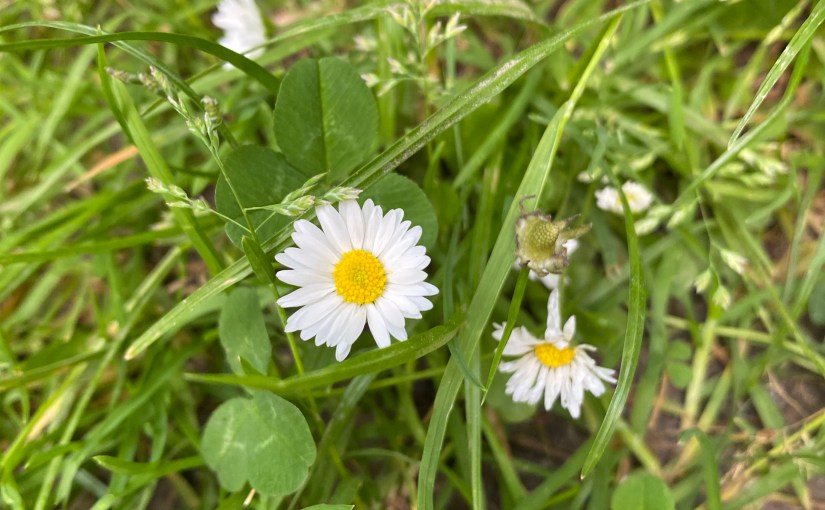
Comment to picture: A unique flower yet similar to all other flowers of its kind.